
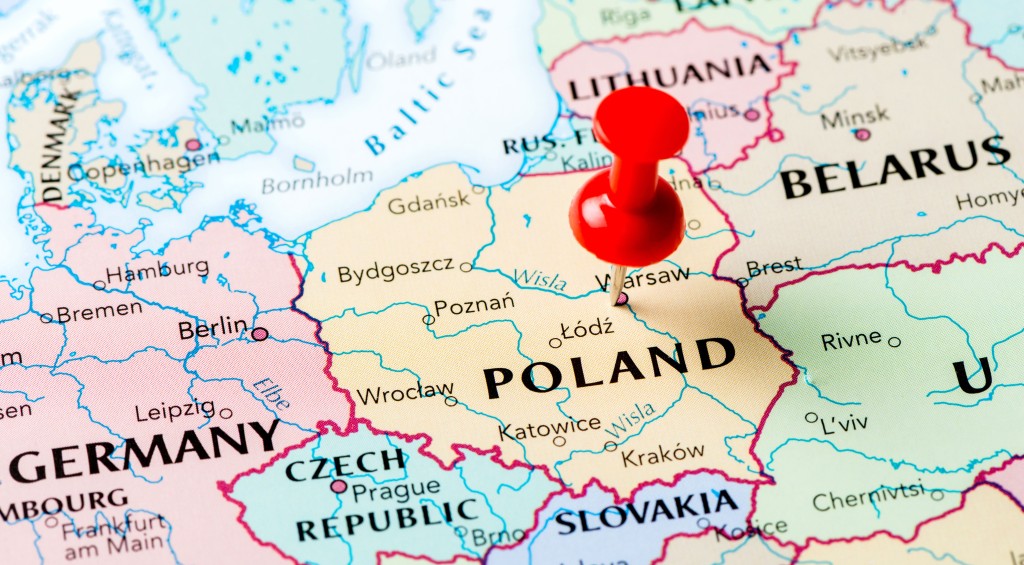
Poland as a country of economic growth
Over the last decade, Poland has emerged as one of the fastest-growing economies in the European Union. Despite major global challenges such as the COVID-19 pandemic and the war in Ukraine, the country has maintained steady economic development and strengthened its position within the EU. This long-term growth has reduced the gap between Poland and the wealthiest EU countries and created favourable conditions for employment and investment. For migrants from less developed countries, economic growth is a key signal of opportunity and stability.
Strong GDP growth compared to other EU countries
According to national statistical data, Poland ranks among the top five EU countries in terms of economic growth over the past decade. GDP per capita increased from 70% of the EU average in 2015 to 79% in 2024, showing consistent progress and convergence with more developed economies. This growth reflects not only macroeconomic stability but also increased productivity, infrastructure development, and expanding labour markets. For migrants, these indicators confirm that Poland is not a temporary or stagnating economy, but a country on a clear upward trajectory.
What economic growth means for migrants
Economic growth translates directly into real job opportunities. A growing economy requires workers across many sectors, particularly in production, logistics, construction, agriculture, and services. For migrants, this means a higher demand for labour, more stable employment, and a greater chance of finding legal work with contracts and social security. Unlike economies with limited growth, Poland’s expanding market offers migrants the possibility of long-term employment rather than short-term or informal jobs, making it an attractive destination for those seeking economic improvement and financial stability.
Job availability and demand for foreign workers
Poland’s economic growth directly affects the labour market and creates strong demand for workers, including migrants. As companies expand and new investments appear across the country, many sectors face labour shortages that cannot be filled by the local workforce alone. This makes Poland increasingly open to foreign workers who are ready to take up employment and work legally. For migrants from less developed countries, this demand translates into real opportunities rather than temporary or uncertain jobs.
Key sectors employing migrants in Poland
Foreign workers play an essential role in several key sectors of the Polish economy. The highest demand for migrant labour can be found in manufacturing and production, where factories require a stable workforce to maintain output. Logistics, warehouses, and distribution centres also rely heavily on migrants due to the growth of e-commerce and international trade.
In addition, construction, agriculture, food processing, and various service industries consistently recruit foreign workers. These sectors offer a wide range of positions, from entry-level jobs to more specialised roles, making Poland accessible to migrants with different levels of experience and education.
Legal employment as a key advantage
One of the main reasons migrants choose Poland is the availability of legal employment. Work based on official contracts provides access to social security contributions, health insurance, and clearly defined working conditions. This creates predictability and protection that are often missing in informal or grey-market employment common in some other countries.
For migrants, legal work in Poland means regular income, compliance with labour law, and the ability to build a stable future without the constant risk of fines, unpaid wages, or sudden job loss. This legal framework is a significant advantage for those seeking long-term economic improvement rather than short-term survival.
Quality of life and health conditions
An improving quality of life is another important reason why migrants increasingly choose Poland. Over the past decade, living conditions have steadily improved, supported by economic growth, better access to public services, and investments in healthcare and infrastructure. While Poland still faces challenges, the overall trend shows clear progress that makes everyday life safer and more predictable for both residents and newcomers. For migrants from less developed countries, these improvements are a meaningful factor when deciding where to live and work.
Rising life expectancy and better health outcomes
An improving quality of life is another important reason why migrants increasingly choose Poland. Over the past decade, living conditions have steadily improved, supported by economic growth, better access to public services, and investments in healthcare and infrastructure. While Poland still faces challenges, the overall trend shows clear progress that makes everyday life safer and more predictable for both residents and newcomers. For migrants from less developed countries, these improvements are a meaningful factor when deciding where to live and work.
Access to healthcare and public services
Legal employment plays a crucial role in accessing healthcare and public services in Poland. Migrants who work legally and pay social security contributions gain access to the public healthcare system, including medical consultations, hospital treatment, and preventive care.
Beyond healthcare, legal employment also provides access to other public services such as social insurance and administrative support. For migrants, this means protection in case of illness, accidents, or temporary inability to work. The link between legal work and public services makes Poland an attractive destination for those who want not only to earn money, but also to live in a country where basic needs and health are supported by a functioning public system.
Affordable living compared to Western Europe
One of the key factors influencing migration decisions is the balance between income and living costs. While wages in Poland may be lower than in some Western European countries, the overall cost of living is significantly more affordable. This balance allows migrants to maintain a reasonable standard of living while still being able to save money. For many people from less developed countries, Poland offers a more realistic and sustainable financial environment than wealthier but more expensive destinations.
Lower cost of housing and daily expenses
Compared to Western Europe, housing in Poland is generally more affordable, especially outside the largest metropolitan areas. Rent, utilities, public transport, and basic groceries typically cost less than in countries such as Germany, the Netherlands, or France. At the same time, Poland maintains European Union standards in infrastructure, public services, and consumer protection.
For migrants, lower daily expenses reduce financial pressure and make it easier to cover essential needs such as accommodation, food, and transportation without relying on informal work or excessive overtime.
Better real purchasing power for migrants
Lower living costs combined with stable employment result in higher real purchasing power for migrants. Even with moderate wages, workers in Poland are often able to save money, support their families, or send remittances to their home countries.
This financial stability is particularly important for migrants whose main goal is to improve their economic situation over time. Poland’s cost–income balance allows migrants not only to survive, but also to plan, save, and gradually build financial security — something that is far more difficult in high-cost Western European economies.
Poland as a realistic entry point to Europe
For many migrants, Poland is not only a place to find work, but also a practical first step into Europe. Unlike countries that function mainly as transit destinations, Poland increasingly offers real opportunities for employment, residence, and long-term integration. Its growing economy, legal labour market, and improving living conditions make it a country where migrants can realistically start building their future rather than just passing through.
Geographic and cultural proximity
Poland’s geographic location and cultural context make adaptation easier for migrants from Eastern Europe, Central Asia, and the Balkans. Similar social norms, work culture, and everyday habits reduce the cultural distance that many migrants experience when moving to Western Europe.
Shorter travel distances, familiar climate conditions, and closer linguistic roots for some groups also support smoother integration. For migrants who want to adapt gradually, learn the language, and understand local systems, Poland offers an environment that feels more accessible and less overwhelming than many wealthier but culturally distant destinations.
Why Poland makes sense for migrants from less developed countries
Taken together, Poland’s economic growth, labour market demand, political stability, improving quality of life, and affordable living costs form a clear picture of a country that offers real opportunities for migrants. Poland is not positioned as the richest destination in Europe, but as a place where work is available, rules are predictable, and legal employment is achievable. For migrants from less developed countries, these factors are often more important than high wages alone. Poland provides a realistic environment to work, save money, and gradually improve living conditions in a stable European context.
Poland as a country of opportunity, not illusion
Poland does not promise quick wealth or instant success. Instead, it offers something more sustainable: steady work, legal protection, and a chance for long-term improvement. Migrants who choose Poland often do so because they are looking for reliability rather than risky promises.
With legal employment, access to public services, and a growing economy, Poland allows migrants to build stability step by step. This realistic path — based on work, legality, and gradual progress — is what makes Poland a sensible and attractive choice for people seeking a better future in Europe.